
I Refused to Disappear
Syeda Sadia Muslim, 50 – Islamabad
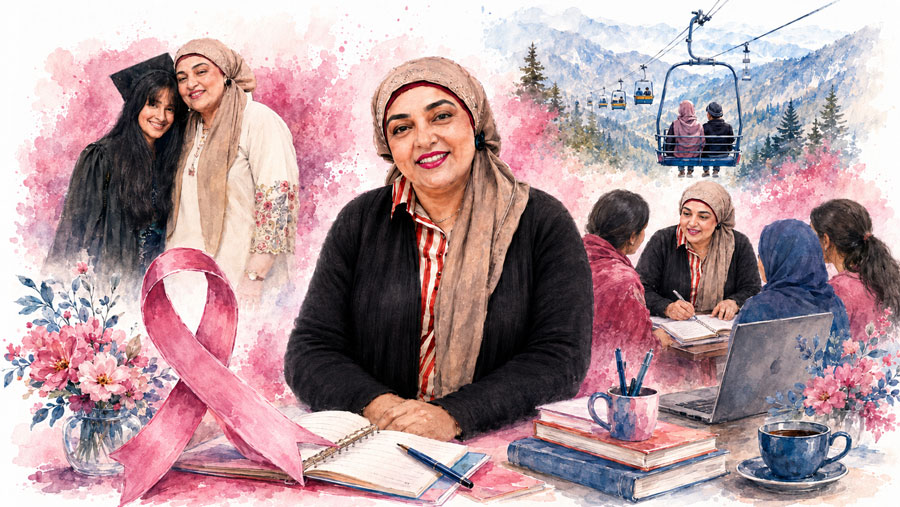
My name is Syeda Sadia Muslim. I work as Senior Assistant Director at the Centre for International Peace and Stability at NUST. I have spent almost three decades working across corporate and academic spaces, and over the years, my work, my students, my colleagues, and my daughter have all become important parts of who I am.
I am also a mother. My daughter, Alishba, is my greatest strength. For many years, it was just the two of us, and I built my life around work, study, and raising her. I learned to be organized, responsible, and focused because I had to manage everything together.
I had started my MS in September. Just one month later, in October, I was diagnosed with breast cancer.
I had felt something was not right in my body. At first, I spoke to doctors I knew. I was advised to get a mammogram, followed by further tests. After the scans and biopsy, I was told I had Stage III breast cancer.
Hearing the diagnosis was not easy. No one is ever fully prepared for that moment. But once I knew, I also knew I had to move forward. My oncologist guided my treatment, and my uncle, who is a doctor, helped ensure that I received the right care.My treatment included surgery, chemotherapy, and radiation.
During this time, I saw a different side of my daughter. Before my illness, I was the one who took care of her in every possible way. But during my treatment, she became more organized and more responsible. She cleaned the kitchen, managed things at home, came with me for chemotherapy, and sat with me through long treatment hours. My illness was difficult for both of us, but it also showed me her strength.
My family also stood beside me. My uncles, aunts, sisters, cousins, mother, and many relatives supported me in different ways. Some people I had not spoken to in a long time reached out. I felt a sense of family bonding that I had not felt so strongly before. My daughter also saw this, and it helped her understand that love and care do not always disappear with distance.
My workplace became a major source of strength too. My institution has felt like a second home to me for many years, but during my illness, I understood that even more deeply. My teachers, colleagues, principal, director, students, administrative staff, transport staff, and even support staff encouraged me, prayed for me, and helped me practically. That support mattered. It helped me continue with dignity.
Cancer treatment changed my body.. My hair fell, my eyebrows went, and my appearance changed. As women, we are often expected to feel shame about these changes, but I decided not to hide myself. My family helped me meet those moments with humour. When I lost my hair, my uncle joked that I looked as if I had returned from Umrah. My sister even made a Happy New Year card from one of my hairless photos and sent it to the family. These small moments made a painful experience lighter.
I did not want cancer to become my whole identity. I attended functions, continued my studies and work where I could, and tried to stay connected to life. There were days of tiredness, weakness, and fear. Treatment is not easy, but I also learned that illness does not have to take away your dignity.
My students have always been very close to my heart. Many of them still call me their mentor, and during my illness, some of them stood by me like family. One of my former students supported my daughter during my surgery and kept checking if we needed anything. These are the relationships I consider my real earnings in life.
Breast cancer also taught me how important awareness is. Many women hesitate to talk about breast symptoms because they feel ashamed. But the breast is a body part, just like any other. If we can talk about heart disease, kidney disease, or any other health problem, we should also be able to talk about breast cancer without shame.
I also tell people that breast symptoms should not be ignored by anyone. A male friend once told me he felt something unusual, and I encouraged him to get it checked too. Awareness should not be limited by embarrassment.
My message to women is simple: listen to your body. If you feel a lump, swelling, pain, nipple changes, or anything unusual, do not delay. Go to a qualified doctor and get proper advice. Do not let fear, shame, or other people’s opinions stop you from seeking care.
I also learned the importance of accepting support. Sometimes we think we have to be strong by doing everything alone, but strength also means allowing people to stand with us. My daughter, my family, my doctors, my colleagues, my students, and my faith all helped me through this journey.
Today, I am grateful to say that my follow-up tests have been clear so far. I continue to take care of my health and follow medical advice. I also continue to work, study, and live my life with purpose.
Cancer was a difficult chapter, but it did not end my story. It reminded me of my own strength, the strength of my daughter, and the power of support. Most of all, it taught me that women should never ignore themselves. Our health matters. Our bodies matter. And our lives are worth protecting.